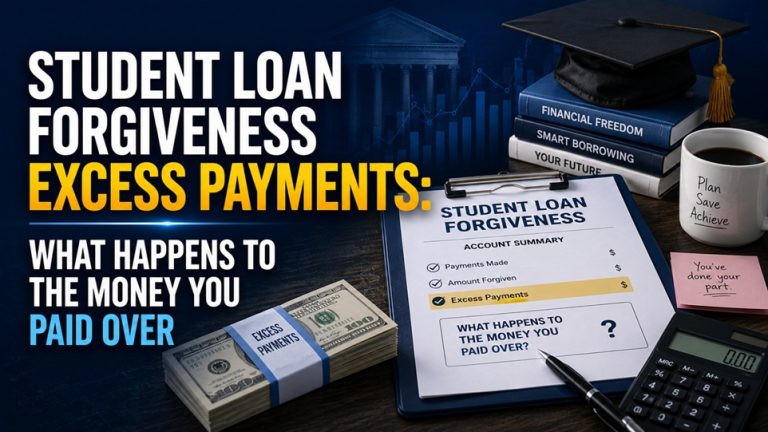
When a federal student loan is forgiven – through PSLF, IDR forgiveness, or a borrower defense action — any payments made beyond the required threshold are typically refunded to the borrower. For PSLF specifically, that means if you made qualifying payments beyond your 120th payment before forgiveness was processed, those excess payments are refunded after forgiveness is granted. For IDR forgiveness (20 or 25 years of qualifying payments), the same general principle applies.
The refund process isn’t automatic and it isn’t fast. Refunds happen after forgiveness is officially processed, which is itself often delayed by backlogs. Borrowers in the PSLF buyback queue often wait many months to a year for forgiveness, then additional weeks or months for excess-payment refunds. The Department of Education’s Federal Student Aid site is the official source for refund and forgiveness policy updates, and the specific process varies by program.
How Excess Payment Refunds Work by Program
| Forgiveness Program | Excess Payment Treatment | Typical Refund Timeline |
|---|---|---|
| PSLF (Public Service Loan Forgiveness) | Refunded after 120 qualifying payments | Months after forgiveness is processed |
| IDR Forgiveness (IBR, PAYE, etc.) | Refunded after qualifying repayment period | Months after forgiveness processed |
| Borrower Defense | Refunded if school misconduct found | Highly variable |
| TPD Discharge (disability) | Refunded under specific conditions | Variable |
| Bankruptcy discharge (rare) | Discretionary, case-by-case | Highly variable |
The general principle across all programs: you don’t have to “earn back” payments that exceeded what was required for forgiveness. The federal government refunds them after the forgiveness is officially granted.
How the PSLF Excess Payment Refund Works
PSLF requires 120 qualifying monthly payments (10 years) while working full-time for a qualifying employer. If you’ve made 125 qualifying payments by the time forgiveness is processed — because, for example, your application sat in a backlog while you continued making payments — those 5 extra payments are refunded.
The refund process:
- You reach 120 qualifying payments and submit your PSLF application
- The Department of Education processes your application (months to over a year)
- Forgiveness is officially granted
- Excess payments from after your 120th qualifying payment are refunded
- Refund issued via direct deposit or check
The math: if your monthly payment was $400 and you made 8 extra payments, you’d receive a refund of $3,200.
What Counts as “Excess”
Not every payment you made counts as excess. The definition is specific:
- Payments made after your 120th qualifying payment for PSLF
- Payments made after your qualifying repayment period for IDR forgiveness
- Payments made during certain forbearance or deferment periods that were later credited
Payments made before you reached the threshold count toward forgiveness — they’re not “excess.” Only payments that pushed your total beyond what was required can be refunded.
The Timeline Reality
Refunds aren’t instant. The typical sequence:
| Stage | Approximate Timing |
|---|---|
| Submit forgiveness application | Day 0 |
| Application enters processing queue | Days to weeks |
| Application reviewed and decision made | Months (currently delayed) |
| Forgiveness officially granted | Days after decision |
| Excess payment refund issued | Weeks to months after forgiveness |
Some borrowers in the recent PSLF backlog have reported waiting more than a year from application to forgiveness, then another 2–6 months for excess-payment refunds. The total wait can approach 18 months.
What Borrowers Should Do While Waiting
Don’t stop making payments. Some borrowers, anticipating forgiveness, have stopped paying — which can cause delinquencies and credit damage.
Document everything. Keep records of every payment, every employment certification, every account statement.
Submit your buyback application if eligible. PSLF Buyback allows you to retroactively pay for forbearance or deferment months. Submitting starts the clock.
Watch the consolidation deadline. Borrowers wanting to keep access to legacy IDR plans need to consolidate before July 1, 2026.
Tax Treatment of Refunds
Refunds of excess payments aren’t taxable income — you’re getting back money you already paid with after-tax dollars. The forgiveness itself, however, may be taxable depending on the program and the year:
- PSLF forgiveness has historically been tax-free at the federal level (and remains so under current rules)
- IDR forgiveness federal tax treatment changed starting January 1, 2026 — forgiveness through certain IDR plans is again taxable income
- State tax treatment varies — some states tax federal loan forgiveness as income, others don’t
This is one area where consulting a tax professional makes sense, especially for IDR forgiveness in higher tax brackets.
What If You Don’t Receive Your Refund
If forgiveness has been officially granted and excess-payment refunds haven’t arrived after 90 days:
- Contact your loan servicer directly
- Check your account on StudentAid.gov for status
- File a complaint with the Department of Education’s Ombudsman Group if servicer response is inadequate
- Submit a complaint to the CFPB
Most refund delays resolve with a direct call to the servicer. Persistent problems escalate effectively through the federal ombudsman process.
Bottom Line
Excess payments on forgiven federal student loans are refundable — you don’t lose the money you paid past your forgiveness threshold. The process is slow, especially during the current backlog, and the refunds don’t arrive automatically. Keep making payments while you wait, document everything, and follow up if more than 90 days pass after forgiveness is granted without your refund arriving.