
Tag

personal finance

Browsing

Key Highlights

  • Minimum income requirements for foreigners are generally higher than those for Singapore citizens.
  • Digital platforms have simplified the process of applying for an online loan in Singapore.
  • Maintaining a valid work pass with at least 6 months of validity is essential for most lenders.
  • Comparing interest rates and repayment terms can save you significant money over the loan duration.
  • Providing proof of residence, such as utility bills, is a standard requirement for all applicants.

Introduction

Life in a new country often brings unexpected financial demands, from relocation costs to emergency expenses. For expatriates living in the city-state, accessing credit can sometimes feel daunting due to the strict regulatory environment. Fortunately, obtaining a personal loan for a foreigner in Singapore is entirely possible if you understand the specific criteria that lenders look for. Modern approaches have further eased this process, allowing residents to browse and apply for credit through digital channels.

Meeting the Income and Employment Criteria

The most significant hurdle for any non-resident seeking credit is the income threshold. Financial institutions typically set a higher minimum annual income for foreigners than for locals to mitigate the risk associated with transient residency. Most banks and licensed lenders require foreigners to earn at least $40,000 to $60,000 annually. Additionally, your employment status plays a critical role. Lenders prefer applicants who have been with their current employer for at least six months and hold an Employment Pass or S Pass. If you are seeking a personal loan for a foreigner, having a stable job and a clear track record of income will significantly boost your approval odds.

Understanding Interest Rates and Effective Interest Rate

When comparing different credit options, it is vital to look beyond the advertised flat interest rate. The Effective Interest Rate, or EIR, provides a more accurate picture of the true cost of borrowing because it accounts for processing fees and the loan’s declining balance. For a personal loan for a foreigner, these rates can vary widely depending on your credit profile and the lender’s policies. You should always ask for a full breakdown of the repayment schedule to see how much of your monthly instalment goes toward the principal versus the interest. Being diligent about these figures ensures that you do not take on debt that becomes difficult to manage in the future.

The Rise of Digital Lending Platforms

The convenience of financial technology has revolutionised how people borrow money. Seeking an online loan in Singapore is now the preferred method for many busy professionals who cannot afford to visit a physical office during work hours. Online platforms allow you to upload your documents, such as your work pass and payslips, directly through secure portals. These systems often integrate with Singpass and MyInfo, which speeds up the verification process by automatically pulling your government-verified data. This digital approach not only saves time but also allows for faster disbursements, with many lenders providing a decision within 24 hours of the initial application.

Preparing Necessary Documentation

To ensure a smooth application process, you must have all your paperwork ready before you start. Lenders will invariably ask for a copy of your passport and your valid work pass. You will also need to provide proof of your residential address in Singapore, which can be done using a recent utility bill, a phone bill, or a tenancy agreement. For income verification, most institutions require your latest three to six months of computerised payslips and your most recent Notice of Assessment from the tax office. Having these documents prepared digitally makes applying for an online loan in Singapore much more efficient, reducing the back-and-forth communication with the lender.

Conclusion

Navigating the financial world as an expat requires a blend of local knowledge and careful planning. While the requirements for a personal loan for a foreigner are stringent, they are transparent and manageable for those with stable employment. By leveraging modern digital tools, you can access the funds you need with minimal hassle. Always remember to borrow only what you need and ensure that your monthly repayments fit comfortably within your budget. Taking the time to compare your options and understand the terms will lead to a much more positive financial experience in one of the world’s most dynamic economic hubs.

Contact 118 Credit today to find the best loan options that suit your specific lifestyle and needs.
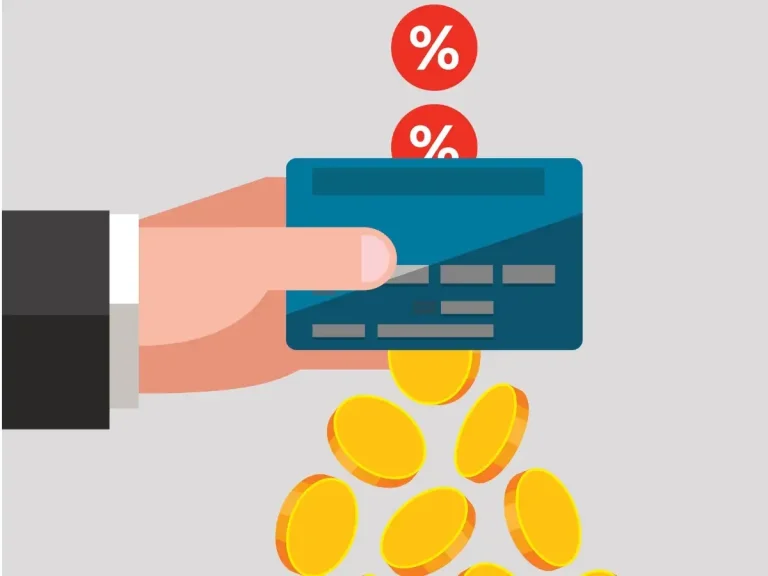
Credit card interest is not complicated. It feels complicated because card issuers describe it using terminology that obscures rather than clarifies. APR sounds like an annual rate, but it is actually applied daily. Your balance is not what you spent this month; it is an average calculated across every day of the billing cycle. Once those two things click, it becomes much easier to calculate credit card interest and the rest follows logically.

To calculate credit card interest: divide your APR by 365 to get the daily periodic rate, then multiply it by your average daily balance, then multiply by the number of days in your billing cycle. For a card with 24% APR, a $1,000 average daily balance, and a 30-day cycle: (24% ÷ 365) × $1,000 × 30 = $19.73 in interest for that month. The formula is: Interest = (APR ÷ 365) × Average Daily Balance × Days in Billing Cycle.

Key Terms: A Plain-Language Glossary

Term What It Actually Means
APR (Annual Percentage Rate) The yearly interest rate on your card. Divide by 365 to get the daily rate. A 24% APR = 0.0658% per day.
Daily Periodic Rate (DPR) APR ÷ 365. This is the rate applied to your balance every single day – not once a month.
Average Daily Balance The sum of your balance on each day of the billing cycle, divided by the number of days. Not just your end-of-month balance.
Billing Cycle Typically 28-31 days. Interest is calculated over this period and added to the following month’s statement.
Grace Period The window (usually 21-25 days) after your statement closes in which you can pay in full to avoid any interest. Only applies if you paid in full last month too.
Minimum Payment The smallest payment the issuer accepts. Paying only this almost never eliminates the balance – it mostly covers interest.

The Interest Calculation Formula

The formula card issuers use – and which is disclosed in your card agreement – is:

Interest Charge = Daily Periodic Rate × Average Daily Balance × Number of Days in Billing Cycle

Or equivalently: Interest = (APR ÷ 365) × Average Daily Balance × Billing Cycle Days

Step-by-Step Worked Example

Scenario: Your card has a 22.99% APR. Your billing cycle is 30 days. Here is how your average daily balance builds up:

Day Range Balance During Period Days Subtotal (Balance × Days)
Days 1-10 $500 (opening balance) 10 days $5,000
Days 11-20 $800 (made a $300 purchase on day 11) 10 days $8,000
Days 21-30 $650 (made a $150 payment on day 21) 10 days $6,500
Total 30 days $19,500

Step 1 – Average Daily Balance: $19,500 ÷ 30 days = $650

Step 2 – Daily Periodic Rate: 22.99% ÷ 365 = 0.06299% per day (0.0006299)

Step 3 – Interest Charge: 0.0006299 × $650 × 30 = $12.28

Your interest charge for this billing cycle: $12.28. This appears on your next statement.

APR to Daily Rate Quick Reference

APR Daily Rate Interest on $1,000 (30-day cycle) Interest on $5,000 (30-day cycle)
15.99% 0.04380% $13.14 $65.70
19.99% 0.05476% $16.43 $82.15
22.99% 0.06299% $18.90 $94.49
24.99% 0.06847% $20.54 $102.70
27.99% 0.07669% $23.01 $115.05
29.99% 0.08217% $24.65 $123.25
35.99% 0.09860% $29.58 $147.90

Why Minimum Payments Are a Financial Trap

Card issuers set minimum payments low enough that carrying a balance seems manageable. It is not. Here is what carrying a $3,000 balance at 24.99% APR actually costs:

Payment Strategy Monthly Payment Total Interest Paid Time to Pay Off
Minimum only (~2% of balance) Starts ~$60, decreases $4,218 Over 15 years
Fixed $100/month $100 $1,697 5 years 1 month
Fixed $150/month $150 $881 2 years 8 months
Fixed $300/month $300 $289 11 months
Pay in full each month Full balance $0 N/A – no interest

The minimum payment on a $3,000 balance generates $4,218 in total interest – more than the original balance itself. This is not an unusual outcome. It is what the product is designed to produce if you do not actively manage it.

How Grace Periods Work (and When You Lose Them)

The grace period is one of the most important and least understood features of credit cards. It works like this: if you pay your statement balance in full by the due date, the card issuer waives all interest on purchases made in the previous billing cycle.

  • Grace period is active: paid in full last month → new purchases have 21-25 days interest-free before your next due date
  • Grace period is lost: carried any balance last month → interest starts accruing on new purchases from the day they post, with no free period
  • To restore the grace period: pay the full statement balance for two consecutive months
  • Cash advances have no grace period ever – interest starts immediately on the transaction date

How to Use This Knowledge to Pay Less Interest

  • Pay the full statement balance every month – this is the only way to pay zero interest on purchases
  • If you cannot pay in full, pay as much above the minimum as possible – every extra dollar reduces the average daily balance for next month
  • Make mid-cycle payments – because the average daily balance is calculated daily, paying before your statement closes reduces that average for the current cycle
  • Request an APR reduction – a single phone call citing your payment history has a success rate of roughly 70% according to consumer surveys
  • Balance transfer to a 0% introductory APR card – buys time to pay down principal without the interest compounding against you

Understanding how this calculation works does not require a finance degree. It requires knowing that interest is daily, that your average balance (not your end-of-month balance) is what is charged, and that the grace period is the single most powerful tool available to a credit card user who wants to pay nothing in interest.